
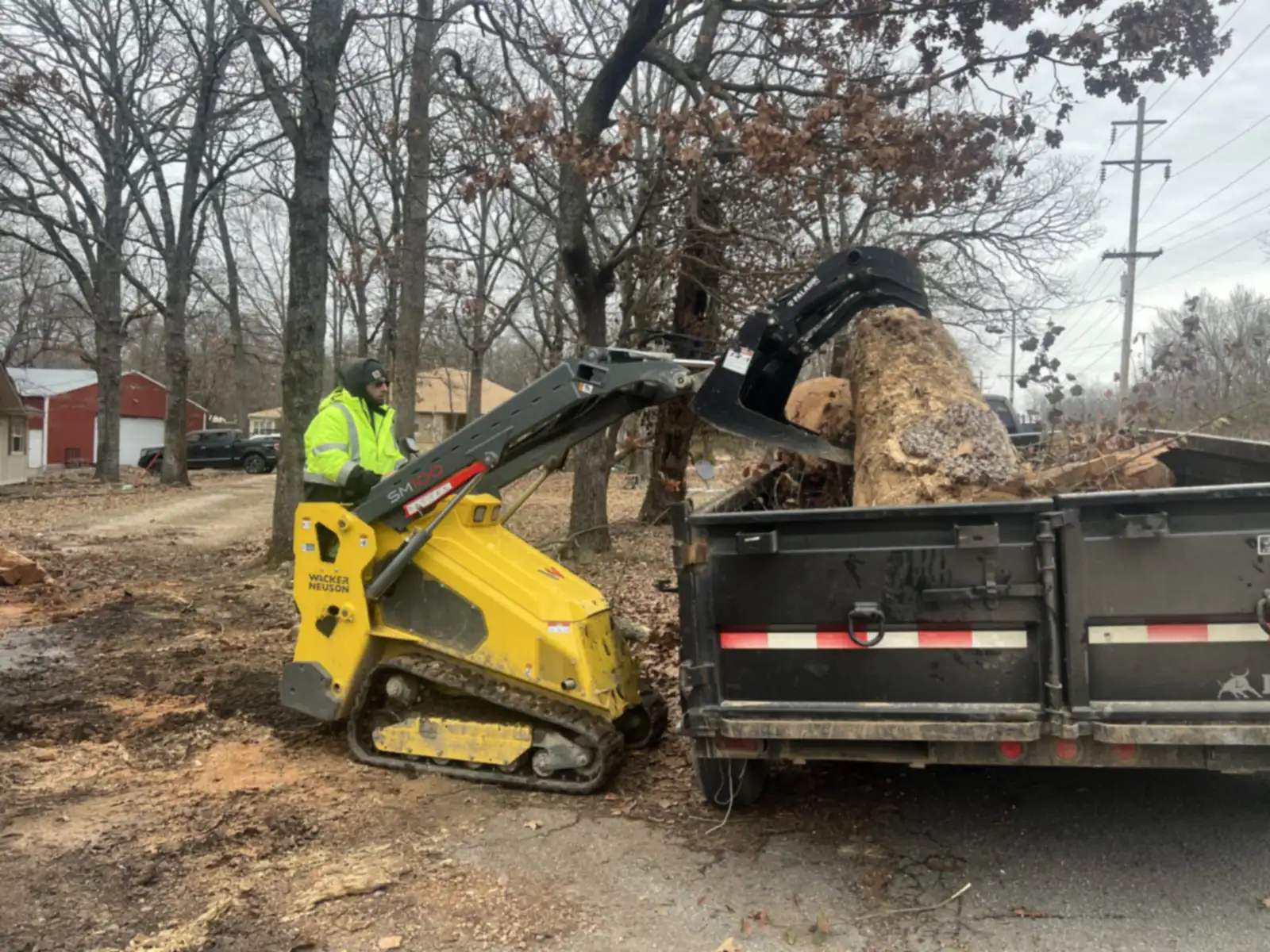
How Much Does Tree Removal Cost in Tahlequah, OK?
The honest answer is that it depends on the tree. This guide explains exactly what changes the price of tree removal in Tahlequah, so you know what to expect before you call for your free on-site estimate.
Call or text (918) 221-9538 for a free estimate.
No two tree jobs in Cherokee County are the same. A small ornamental tree in an open front yard is a very different job from a tall oak leaning over a house on a hillside lot. That is why Tahlequah Trees prices every job after a free on-site visit instead of quoting a number over the phone. If you already know you need a tree down, see our tree removal in Tahlequah page.
Below we break down how tree size, access, condition, nearby structures and cleanup choices affect the price, what changes for emergency work, and how to get an exact free estimate.
Typical Tree Removal Prices in Tahlequah
Tree size is the starting point for every price. The table below shows how we group trees and what each removal includes. Your final price is set after a free on-site estimate.
| Tree size | Typical example | What is included | Price |
|---|---|---|---|
| Small (under about 30 ft) | Ornamental trees, young cedars, small pines | Cutting, cleanup of limbs and brush, haul-off | Free on-site estimate |
| Medium (about 30–60 ft) | Most yard oaks, maples, pecans and pines | Sectional or felled removal, cleanup, haul-off | Free on-site estimate |
| Large (over about 60 ft) | Mature oaks, sycamores, cottonwoods | Climbing or rigging, sectional removal, cleanup, haul-off | Free on-site estimate |
- Tree size
- Small (under about 30 ft)
- Typical example
- Ornamental trees, young cedars, small pines
- What is included
- Cutting, cleanup of limbs and brush, haul-off
- Price
- Free on-site estimate
- Tree size
- Medium (about 30–60 ft)
- Typical example
- Most yard oaks, maples, pecans and pines
- What is included
- Sectional or felled removal, cleanup, haul-off
- Price
- Free on-site estimate
- Tree size
- Large (over about 60 ft)
- Typical example
- Mature oaks, sycamores, cottonwoods
- What is included
- Climbing or rigging, sectional removal, cleanup, haul-off
- Price
- Free on-site estimate
What Affects the Price of Tree Removal
Five things account for nearly every difference in price between one tree job and another.
Tree Height and Trunk Size
Taller trees with thicker trunks take more time, more cuts and more equipment to remove safely, and they produce more wood and brush to haul away.
Access and Location on the Property
A tree in an open yard that a truck can reach is quicker to remove than one in a fenced backyard, on a steep slope or behind a house where everything has to be carried out by hand.
Tree Condition: Dead, Leaning or Storm-Damaged
Dead and storm-damaged wood can be brittle and unpredictable, and leaning trees need careful rigging. These trees take extra safety steps, which can add time to the job.
Nearby Houses, Fences and Power Lines
When a tree is close to a roof, fence, shop or power line, it usually has to come down in small sections with ropes instead of being felled in one piece. That protects your property but takes longer. Trees touching power lines may need the utility company involved first.
Cleanup and Haul-Off
Most removals include cutting up the tree and hauling away limbs and brush. If you want to keep firewood, leave logs on site or skip haul-off, tell us during the estimate and we will adjust the price.
Emergency and Storm Tree Removal Pricing
A tree on a house, car or driveway after a storm is a different kind of job. The work often has to happen quickly, in bad conditions, with damaged wood under tension. Emergency jobs are priced on site based on the same factors above plus the extra safety work involved. Learn more about our emergency tree removal service, and call our 24/7 emergency line at (918) 221-9538.
Is Stump Grinding Included?
Stump grinding is usually priced as a separate line item so you can choose whether you want it. Many homeowners add it to the removal so the spot can be replanted or built on right away. See our stump grinding page for how it works.
Ways to Lower Your Tree Removal Cost
A few simple choices can bring the price of a job down without cutting corners on safety.
Bundle Several Trees or Services
Having several trees, trimming and stump grinding done in one visit saves setup and travel time compared with separate trips.
Keep the Wood
If you heat with wood or have a use for logs, keeping the wood on site cuts down on haul-off time and dump costs.
Schedule Before It Becomes an Emergency
A dead or leaning tree removed on a normal schedule is almost always simpler than the same tree after it falls on a roof. If a tree is only partly damaged, tree trimming may solve the problem for less.
Clear the Work Area
Moving vehicles, outdoor furniture and anything fragile away from the tree before we arrive helps the crew work faster.
The Cost of Waiting
Putting off removal of a dead or failing tree rarely saves money. Dead wood gets more brittle every season, which makes the tree harder and slower to take down safely. A tree that falls during a spring storm or winter ice can damage a roof, fence, vehicle or power line, and the cleanup and repairs usually cost far more than a planned removal. If you are unsure whether a tree is a risk, a free estimate is the easiest way to find out.
How to Get an Exact Free Estimate
Call or text (918) 221-9538 or fill out the estimate form. Tell us the type and rough size of the tree, where it stands and what is near it. A few photos help. We visit the property, walk the job with you and give you a clear price before any work begins.
Tree Removal Cost FAQs
Is a free estimate really free?
+
Yes. We come out, look at the tree and give you a price with no charge and no obligation to book.
Do you charge more for emergency calls?
+
Emergency jobs often take more work because the tree is damaged, under tension or lying on a structure. The price reflects that extra work, and we explain it on site before we start.
Does homeowners insurance cover tree removal?
+
It depends on your policy and what happened. Coverage is often tied to damage to a covered structure. Check with your insurance company; we can provide photos and an itemized invoice for your claim.
Is it cheaper to trim than remove?
+
Often, yes. If a tree is healthy and only a few limbs are a problem, trimming can solve it for less. We will tell you honestly during the estimate whether trimming or removal makes more sense.
How do I know if a tree needs to come down?
+
Warning signs include dead or bare branches, cracks in the trunk, mushrooms at the base, a new or worsening lean and roots lifting from the ground. If you see any of these near your home, have the tree checked.
Request a Free Estimate
Call or text (918) 221-9538 for a free estimate.